Food hygiene
Food hygiene is a key factor in ensuring food safety and consumer health. It consists of a series of practices and procedures designed to prevent food contamination and to ensure that food is kept in optimal condition from production through to consumption.
Within the European Union, there are a number of regulations which form the common basis for the production, processing and distribution of all foodstuffs in accordance with hygiene standards and through a comprehensive, integrated ‘farm-to-table’ approach, throughout the entire food chain.
The aim is to ensure a high level of public health protection and to facilitate the free movement of safe food within the EU market. The primary responsibility for compliance with these standards lies with food business operators, whilst the competent authorities are responsible for verifying compliance with these standards.
Applicable legislation
Regulations (EC) No 852/2004 and (EC) No 853/2004 of the European Parliament and of the Council are primarily aimed at ensuring a high level of public health protection through the implementation of hygiene standards in food production and handling. Regulation (EC) No 852/2004 of 29 April 2004 on the hygiene of foodstuffs lays down general hygiene rules to be followed by food business operators at all stages of the food chain. Furthermore, Regulation (EC) No 853/2004 of 29 April laying down specific hygiene rules for food of animal origin focuses on specific hygiene rules for food of animal origin.
Furthermore, the legislation on official controls applies, notably Regulation (EU) 2017/625, Delegated Regulation (EU) 2019/624, and Implementing Regulation (EU) 2019/627.
Furthermore, at national level, there are hygiene regulations that cover aspects not addressed in these regulations or that supplement them, such as the possibility of applying flexible measures in accordance with Royal Decree 1086/2020, or the specific hygiene requirements for the retail sector set out in Royal Decree 1021/2022.
Food Safety Management System (FSMS)

European Commission guidelines on the implementation of hygiene regulations
In order to help Member States and food business operators better understand food hygiene rules and how to implement them in specific sectors, the European Commission’s Directorate-General for Health and Food Safety, in collaboration with the Member States, has drawn up a series of guidelines published on the DG SANTE website, including the following:
Guidelines on Good Hygiene Practices and for the implementation of HACCP
Flexibility in the application of the regulations under the hygiene package

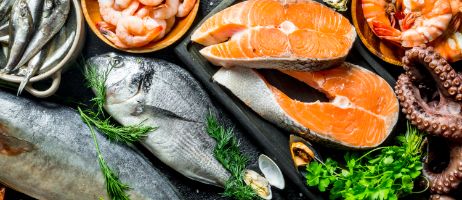
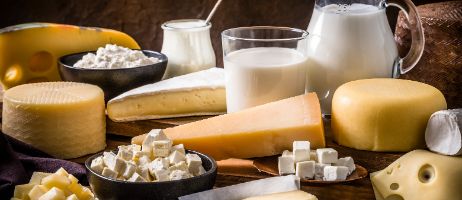
Products of animal origin
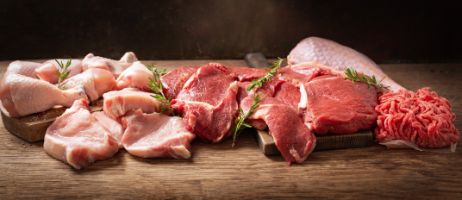
Products of animal origin must comply with strict hygiene requirements set out in European legislation.
Specifically, Regulation (EC) No 853/2004 of 29 April 2004 lays down specific hygiene rules for food of animal origin. Annex III sets out specific requirements for certain products of animal origin.

Products of non-animal origin
Regulation (EC) No 852/2004 of 29 April 2004 on the hygiene of foodstuffs sets out, in general terms, an integrated approach to ensuring food safety from the point of primary production through to the placing on the market or export.
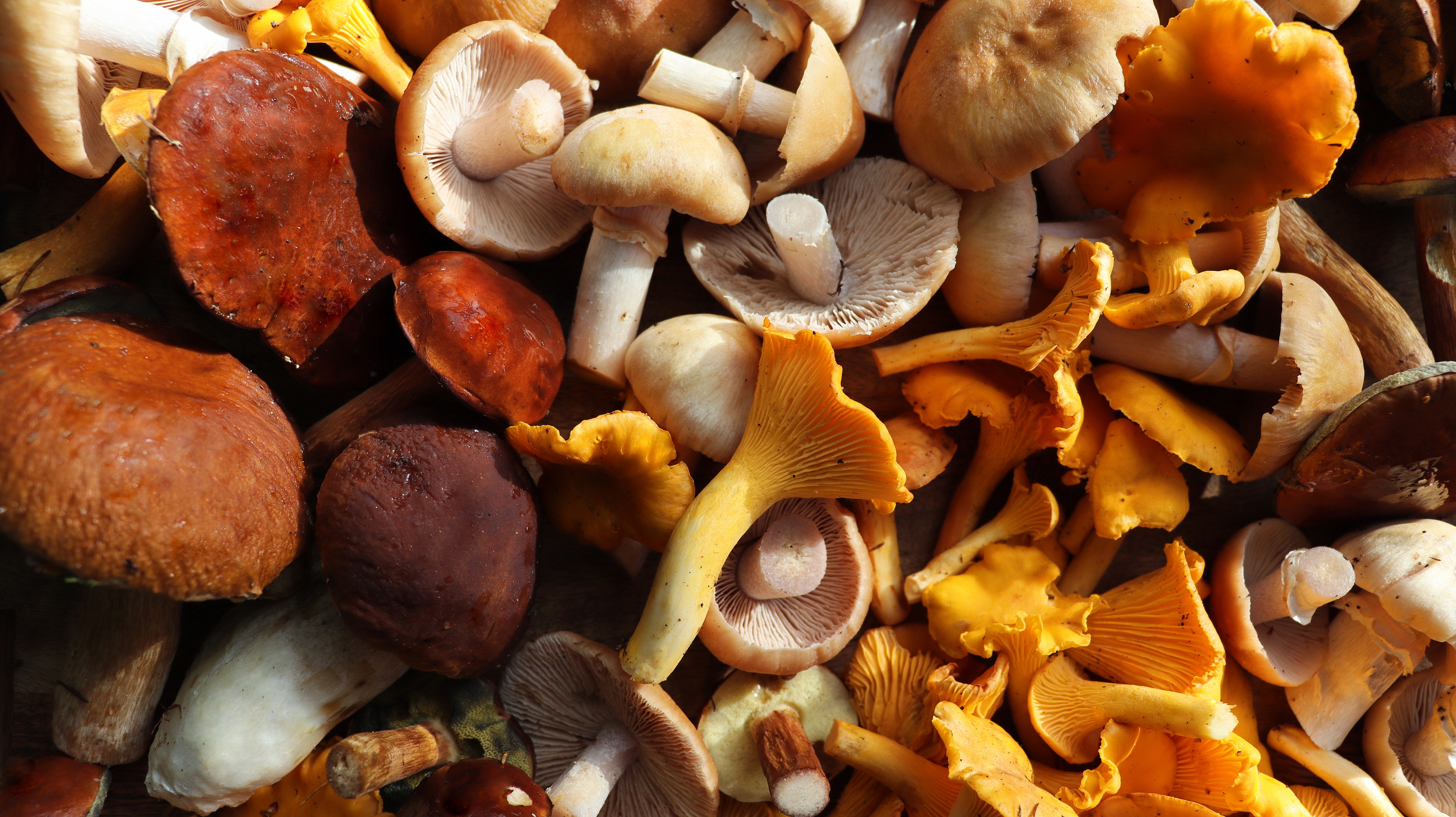
Products of non-animal origin, such as vegetables, sprouted seeds and mushrooms, must comply with the provisions of the aforementioned regulation, as well as with any specific regulations that apply to them.
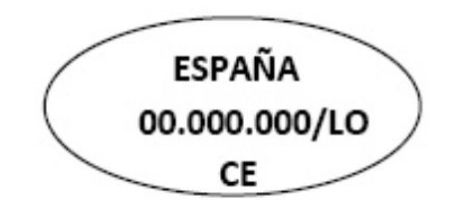
Identification mark and health mark
Furthermore, in establishments authorised under Regulation 853/2004, operators must identify their products using specific markings in accordance with the provisions of the applicable legislation.
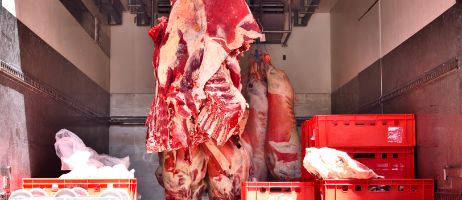
Food transport
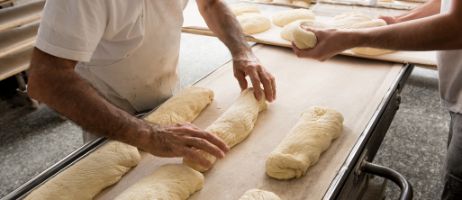
Food hygiene training
Education and training are essential components of food safety programmes across all sectors of the food chain.
For this reason, Regulation (EC) No 852/2004stipulates that food business operators must ensure:
- The supervision and instruction or training of the food product handlers in questions of food hygiene, in accordance with their work activity.
- Those responsible for developing and maintaining procedures based on HACCP principles, or applying the relevant guides, must have received adequate training in applying HACCP principles.
- Compliance with all the requirements of national legislation relating to training programmes for workers in certain food sectors.
Hygiene in retail premises
Food retail outlets are businesses that handle, prepare, produce or process food, and store it for sale or delivery to the end consumer.
These establishments vary in size and type, including grocery shops, supermarkets, bars, restaurants, ice-cream parlours, patisseries, and mobile or temporary outlets (marquees, market stalls, mobile sales vehicles)
Food safety is a fundamental aspect of the retail sector. Compliance with the hygiene requirements set out in current legislation prevents foodborne illnesses and protects consumers’ health. At national level, Royal Decree 1021/2022 sets out the hygiene requirements for the production and sale of food products in retail outlets.
This Royal Decree sets out conditions for the supply of food between establishments, food storage temperatures, requirements for freezing and thawing, specific requirements for meat, fishery products and foods containing eggs, tasting areas, labelling, vending machines and food donations. It also addresses the supply of prepared food from premises used primarily as private dwellings, the access of animals to retail premises, and the hygiene requirements to be met by premises where dogs or cats are present for the purpose of interacting with customers. It also regulates the sale of defective food and food in reusable containers, and allows for adjustments to hygiene requirements and a simplified application of the HACCP system.
Retail establishments may supply food produced on their own premises and products of animal origin to other retail establishments, provided that such supply is of a marginal nature, localised and restricted:
- Marginal: Less than 25 per cent of the annual volume of food sold, or a maximum of 500 kg per week.
- Localised: Within the local health unit, health area or equivalent territory, or between neighbouring areas. For trade between autonomous communities, the maximum radius is 50 km from the point of origin.
- Restricted: Products are not supplied to establishments listed in the General Health Register of Food Businesses and Foodstuffs (RGSEAA).
| Alimento | Temperatura de refrigeración |
|---|---|
| 1. Carne de ungulados domésticos y de caza mayor silvestre o de cría, excepto ratites. | Igual o inferior a 7ºC. |
| 2. Despojos de ungulados domésticos, de caza de cría y silvestre, de aves de corral y de lagomorfos | Igual o inferior a 3ºC. |
| 3. Carne de aves de corral, de lagomorfos, de caza menor silvestre y de ratites. | Igual o inferior a 4ºC. |
| 4. Preparados de carne. | Igual o inferior a 4ºC. |
| 5. Carne picada. | Igual o inferior a 2ºC. |
| 6. Moluscos bivalvos vivos y productos de la pesca que se mantengan vivos. | Temperatura que no afecte negativamente a su inocuidad y viabilidad. |
| 7. Productos de la pesca frescos, productos de la pesca no transformados descongelados, crustáceos y moluscos cocidos y refrigerados. | Temperatura próxima a la de fusión del hielo (0-4ºC). |
| 8. Leche cruda. | 1-4ºC. |
| 9. Productos de pastelería rellenos (salvo que sean estables a temperatura ambiente). | Igual o inferior a 4ºC. |
| 10. Frutas cortadas o peladas, vegetales cortados o pelados y zumos no pasteurizados listos para su consumo y elaborados en el comercio al por menor. | Igual o inferior a 4ºC. |
| 11. Alimentos congelados o ultracongelados | Igual o inferior a -18ºC. |
The temperature requirements for cut or peeled fruit and vegetables deserve special mention. Notwithstanding the provisions of point 10 of the temperature table for foodstuffs, melons, watermelons, pineapples and papayas cut in half or into quarters may be kept at room temperature (20–25 °C) for a maximum of three hours after cutting. They must then be kept refrigerated until they are sold.
The time at which the fruit was cut must be recorded, and consumers must be informed by a sign, label or other means that the fruit must be refrigerated. Bulky vegetables cut in half, such as cabbages, cauliflowers or similar, do not need to be refrigerated.
Operators may set different storage conditions, provided they demonstrate to the competent authority that these are based on scientific evidence and that the safety of the products is guaranteed. In order to authorise these alternative storage conditions, the Procedure for the assessment of storage conditions for fruit cut into halves or quarters that differ from those laid down in Royal Decree 1021/2022shall be followed.
The various companies and storage conditions that have been authorised are currently set out in the following table:
Freezing in retail outlets must comply with the following:
- Packaged food: keep the original packaging with the use-by or best-before date and add a label showing the date of freezing.
- Unpackaged food: place in food-safe containers and label with the date of arrival and the date of freezing.
- Fresh meat: freeze immediately upon receipt or after maturing. It must not be sold once it has been defrosted.
- Products made on the premises: Pack and label with the date of manufacture/processing, freezing and use-by/best-before date.
Establishments must have freezing equipment capable of reaching a core temperature of -18 °C or below.
Defrosting is permitted:
- Frozen food for sale, clearly labelled as having been defrosted.
- Raw materials for processing/manufacturing at the premises.
Defrosting must be carried out under refrigerated conditions, taking care to avoid cross-contamination and contact with defrosting liquids. Defrosting at room temperature (where justified), in the microwave or in cold water is permitted, provided the food is cooked immediately afterwards. Food must not be refrozen, unless it has been processed.
Deboning and cutting must be carried out quickly, and the meat must be transferred without delay to the storage, preservation or display rooms.
Meat must be minced at the customer’s request and in their presence. Meat may be minced in advance for sale on the same day, but it must not be kept until the following day.
Anisakis control
Fish and cephalopod molluscs intended for consumption raw, marinated, salted or subjected to treatments insufficient to kill Anisakis larvae must be frozen at -20 °C for 24 hours or at -35 °C for 15 hours. An exemption from this requirement may be granted for marine aquaculture products accompanied by a declaration from the operator, or for products that have undergone heat treatment at 60 °C for one minute.
Consumers must be informed about whether the product has been frozen or comes from Anisakis-free aquaculture.
Live bivalve molluscs
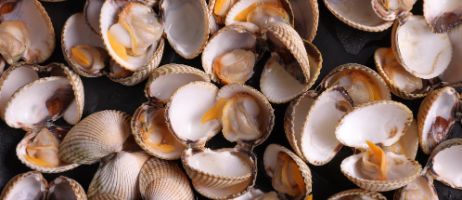
Live bivalve molluscs shall be displayed in their original, labelled packaging. They can be removed from their packaging to be displayed in the sales area (same batch) or to be placed into smaller containers (without mixing batches).
Establishments that use live bivalve molluscs in their dishes or sell them in portioned quantities must retain the packaging label for at least 60 days after the contents of the packaging have been used up.
Retail outlets may use raw eggs to prepare food that:
- Must undergo heat treatment at a temperature of 70 °C or higher for two seconds at the centre of the product, or
- Must undergo heat treatment to ensure that a temperature of 63 °C is reached at the centre of the product for twenty seconds, and must be served for immediate consumption, such as fried eggs, omelettes or other dishes.
In order to produce products that are to be consumed without undergoing heat treatment that meets these conditions, raw eggs must be replaced with egg products.
Foodstuffs that have been heated to over 70 °C for two seconds, or those containing egg products, must – if they are not stable at room temperature – be stored at a temperature of 8 °C or below and consumed within a maximum of twenty-four hours of preparation.